throwing my smartphone into the sea
December 7, 2025
(I didn't actually throw my Samsung Galaxy S21 into the sea, it's in a drawer)
Anyone who has ever spoken to me for more than four minutes knows that I'm not really a "tech" person. All I actually want to do is grow herbs and putter in the garden. I didn't have a cell phone until I was in my 20s, and even then -- it was prepaid and I only turned it on when I needed to call someone.
background (aka the problem)
I was never glued to my phone until I had a baby during Covid. I spent loooooong hours isolated with a colicky infant while my husband was deployed on a submarine. All I had was scrolling and new-motherhood-on-nightmare-mode stress hormones. When the baby woke me up at night, I just scrolled Instagram or Facebook until I eventually fell asleep again (or sometimes didn't go back to sleep).
I quit Instagram in 2022, and that helped the doomscrolling, and I leave my "burner" FB deactivated much of the time (usually until I'm in a decluttering season and need access to Marketplace, since it killed my old friend Craigslist).
2024 was an exceptionally stressful year for me, my family, and my community. In the 4 days after Hurricane Helene ran through East Tennessee, Virginia, and Western North Carolina, I sent and recieved 3000 text messages and fielded countless phone calls helping to coordinate rescue efforts. After the authorities finally made it to the mountains, I was able to step away from the Helene response, but I just never put my phone back down. My phone use continued to escalate and I was spending like 5+ hours a day looking at the nightmare rectangle. My reasons for wanting to quit my phone were simple:
- I've never liked being at anyone's beck and call, and the phone makes me feel like I have to respond immediately
- I was spending hours a day on the internet, ON MEANINGLESS CRAP
- I was actually starting to impulse buy things
- My 5 year old son told me he didn't like how I pay more attention to my phone than I do him
my needs
I started reading a lot of "how to ditch your phone in (current year)" articles. I read and watched just about everything Jose Briones put out. I ended up making a list of all the things that I need and want to have and really thought hard about whether they needed to be in a single device or not. Here's my list:
- MFA app for things I can't use a hardware key for (NON NEGOTIABLE)
- GPS
- Music player (offline is okay, I want to leave Spotify anyway)
- Podcast player (I'm okay downloading things on wifi ahead of time)
- Audiobook player (Audible boo hiss, but I haven't escaped)
- Android Auto or Apple Car Play capabilities -- we go on a LOT of roadtrips and my car's media capabilities are honestly trash -- I need to be able to listen to music, books, or podcasts in a car in a way that's easy to safely deal with while driving
- Cronometer app (I can do it on the desktop, just harder to maintain a streak)
- Slack (for urgent stuff only, when I travel or am off work, this isn't even a hard requirement for me anymore)
- Phone
- SMS messaging, I don't really care about the fancy messaging cause I can have longer or multimedia rich conversations over Signal on the desktop
- Camera (I have a child and taking pictures sometimes is important to me)
After thinking through my requirements, it became super clear I wasn't going to be able to fully escape the Android or iOS handcuffs until every service I use at work and at home can support a hardware key.
things I tried
I'd previously used a Light Phone II, which I got for a phone call and text device, but it was very slow and frustrating to use for the only two things I needed a phone for, so I only used it for a few months. I ended up trading it for 10 dozen eggs (I am still owed 6 dozen eggs, as it is winter and the hens are on strike).
I also tried a Ghost Mode phone, and did that for a long time, but I honestly hated having to sideload apps and gave it away.
I eventually got the first generation of the Sunbeam Wireless "kosher phones" and I absolutely loved it. It did exactly what I wanted, and had Where Maps for navigation. I found the maps to be super buggy in my mountain town, so I stopped using the nav and got a Garmin unit. The Garmin ended up being a way better fit for us anyway because we go out of cellular range a lot.
The first generation of the Sunbeam phone had a pretty flimsy build and I was often worried about breaking it.
Even with the Sunbeam Wireless phone, I ended up carrying my smartphone anyway because I need MFA and I had to have Slack for urgent work stuff. I'd had several friends running parallel smartphone-ditching experiments warn me that I was going to end up carrying both phones. They were right, and soon I was back to scrolling mindlessly. I eventually just started carrying the Samsung Galaxy again full time.
what ended up working for me
Sunbeam Wireless released the F1 Pro which has a much more rugged build quality and they introduced a hotspot feature. I also learned about the Unihertz Jelly Star which is an impossibly tiny little Android phone with an excessive amount of RAM and built-in storage.
So, I still have two devices, but HEAR ME OUT, it's not as wild as it sounds. I have a wonderful little flip phone for texting and making calls, and I have a teeny tiny Android phone for all my media needs. I don't have a SIM card in the Jelly Star, so when I'm out and about, it's offline. When I'm at home on wifi, I can add audiobooks and download podcast episodes, but most of the apps I use work fine offline. The Jelly Star is so small, it's nearly impossible for my middle aged eyes to do any "real" browsing, and is great for exactly what I need it for.
Side note: the Jelly Star also has a regular headphone jack. :)
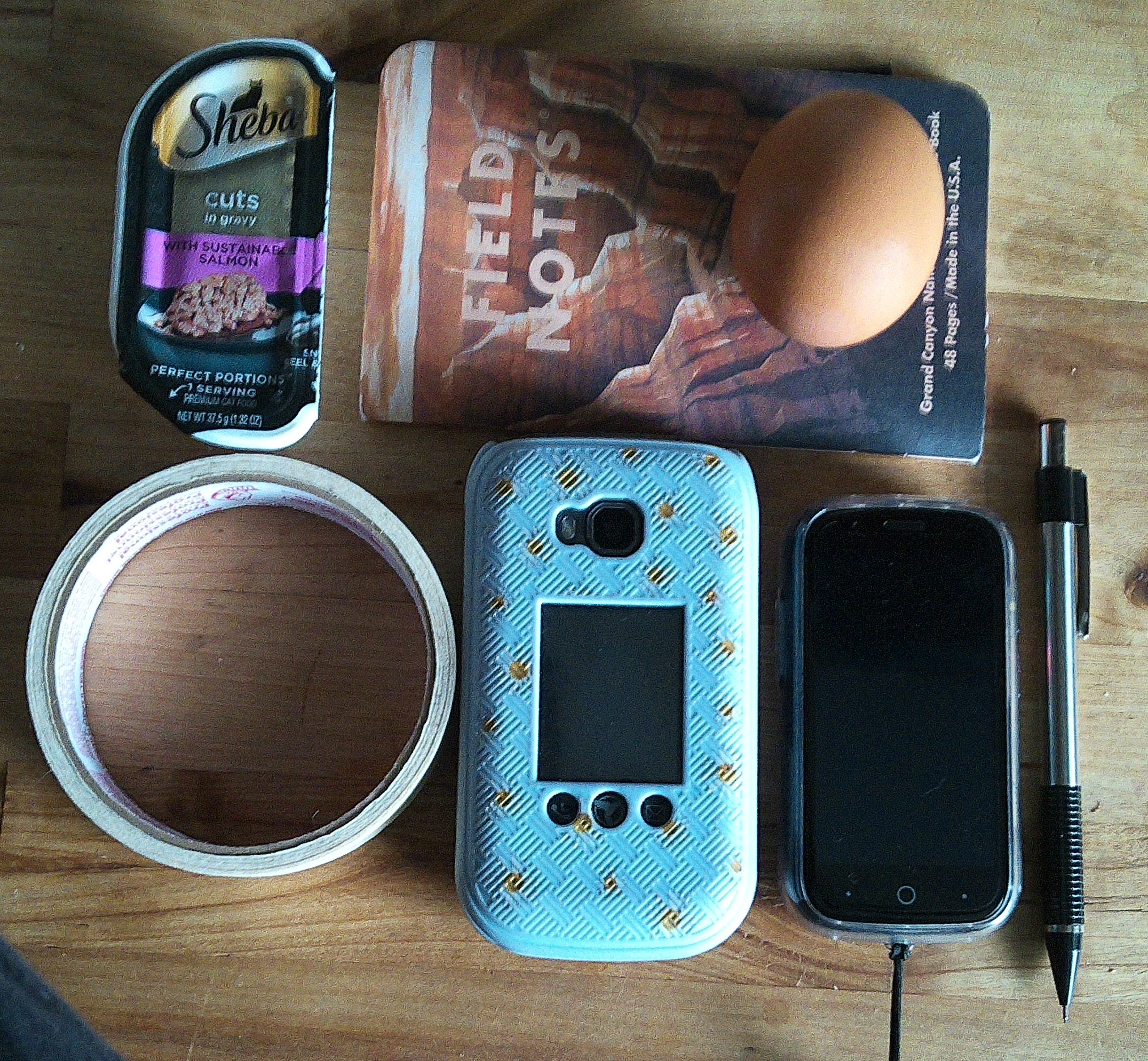
I've also installed the Minimalist Phone app launcher which makes the Jelly Star way less interesting as a dopamine-dispensing lever. I think I paid $40 for lifetime access a few years ago, and I was using it on the Samsung Galaxy for awhile. I think the best part of this app is the mindful delay timers, so if I am on wifi and "want to look something up real quick", I have 15 seconds to decide whether it's really necessary or not before the app opens. I hear there are other app launchers out there, but I've been happy with this one and haven't looked at others.
an aside about needing to look things up
One thing that kept me from ditching mobile internet altogether is that I'm a curious person and I frequently want to look things up. I kept struggling with "what if I see a plant I don't know and want to look it up!? What if I see a word I don't know and want to look it up!?" So, I installed the Kiwix Android app and downloaded Wiktionary and some parts of Wikipedia. Remember, the Jelly Star includes 256 gigs of storage, and is expandable with a microSD card. I can fit my entire music library and all of Wikipedia on it. I was offline this morning, reading, and needed to look up the word byre and was able to do so. (it's called a cowshed where I live).
For plants and other more difficult things I want to learn about, I just take notes in my actual physical notebooks and then look it up when I get home. I have a respectable library of botany books and field guides, so I've been going to those first when I want to look something up. Like in the olden days. This has been a really great practice for me -- yes, it's slower and not instantaneous, but that is the ENTIRE POINT. Especially with the internet being polluted with AI slop and misinformation -- having reference books on hand has become a weird sort of private flex for me.
everything in table form
Anyway, to summarize, here's my personal device stack in table form for your grokking pleasure.
| Need/Want | Which device I use | Notes |
|---|---|---|
| MFA app(s) | Jelly Star | I have to have several MFA apps, unfortunately, but all of them work offline so all is well. The Jelly Star also has NFC and my physical hardware key with NFC works with my Jelly Star. |
| GPS navigation | Garmin | Great for the area we live in and the places we go. Soon, I'm going to try an offline solution that isn't Google Maps but works with Android Auto. |
| Music player (offline) | Jelly Star | PowerAmp. It's very good, I love this app and have a lifetime license. Works with Android Auto. |
| Podcast player | Jelly Star | AntennaPod free, incredible app. |
| Audiobook player (Audible) | Jelly Star | Audible, because my husband and I share a massive collection. I just have to remember to download things before leaving the house, or I can use my Sunbeam's hotspot in a pinch. |
| Android Auto/CarPlay | Jelly Star | Everything I need works beautifully offline. |
| Cronometer app | Jelly Star | Doesn't work at all offline, which is a BUMMER, but it's good for trips away from home when I'm not near my computer. I just log my food in my physical notebook and log when I'm able to go on wifi. |
| Slack | Jelly Star | I don't actually have Slack downloaded right now because I have a competent team mate at work and no longer need to be online all the time. |
| Phone calls | Sunbeam | Works great as a phone. It's what it's for. |
| SMS messaging | Sunbeam | Does the job easily. Can also get group messages and photo attachments, but the image quality is flip-phone quality. |
| Camera | Jelly Star / Camp Snap Pro | The Jelly Star takes OK photos. Recently got a Camp Snap pro for early 2000's crappy digital camera nostalgia and that's been satisfying enough for me. I'm currently having to work through a backlog of 150 gigs of photos from the past 6 years. Maybe I don't need unfettered access to an excellent camera? No, I don't. |
| Hotspot | Sunbeam | This has come in handy when out of town and needing to check store hours or something. |
| Note taking | Pocket notebooks | I carry Field Notes brand notebooks (my fave) contained in a beautiful secondhand Chic Sparrow holder. I've seriously got 8 Field Notes books crammed in that thing and I carry it in my purse everywhere with my mechanical pencil. Writing by hand is rewiring my brain into something better, I think. |
| Looking things up | Jelly Star / notebook + books | Kiwix has been amazing to have on my little Jelly Star and I look stuff up in Wiktionary pretty frequently. I do still use the "big internet" on a desktop if I don't have a reference for something or fail to find an answer in one of my books. |
the end
I'm absolutely pleased with my stack. It works well for me. The Jelly Star doesn't even register as an internet device to me. I'm going to try out Organic Maps because it works offline and works with Android Auto. I love my Garmin for road trips, but it's awkward to use in my car if I don't have a copilot (my dear husband). Also, I've been doing more printing off directions than I used to, because I want the navigation part of my thinking to grow back.
I know this all seems like a pain in the ass, but that's the point. Putting up barriers between me and instant-access entertainment and information has taken the inside of my head from a flooding river that's full of mud and sewage and runoff to a clear, babbling brook. My attention span is better, I'm more emotionally regulated, my thinking is so much clearer, I've had more quality time with my family, I'm reading, I'm writing, I've done a bunch of side projects -- the list goes on and on. People can still text or call me. My social life remains unchanged. My connections with others are more meaningful.
I cannot stress to you enough how good this experiment has been for me as a whole person -- I know this all comes off as pretty unhinged in 2025. If you also feel addicted to your screens, maybe sit down and list out your needs and wants. I bet you can find a way to limit your aimless device use but still meet all your needs.
Anyway, if you've experimented with going low-device or offline or whatever, let me know what worked for you.